August 26, 2024

The message of Janmashtami.


The beauty of our ancient stories is that they are never set in a particular place or at a particular time. Ramayana or Mahabharata are not just events that happened in ancient times. They happen in our lives every day. The essence of these stories is eternal.

Similarly, the story of Shri Krishna's birth also has a deep meaning. In this story, Devaki symbolizes the body and Vasudeva symbolizes the life force i.e. Prana. When the body takes on Prana, Anand i.e. Shri Krishna is born. But the ego (Kans) tries to destroy the Anand. Here Kans, the brother of Devaki, shows that along with the body, the ego also exists. A happy and joyful person never creates problems for anyone, but emotionally sad people often make others unhappy or create obstacles in their path. A person who feels that he has been wronged also treats others unjustly due to his ego.

The biggest enemy of the ego is  Joy (Anand). Where there is joy and love, the ego cannot survive, it has to bow down. Even a person occupying a very high position in society has to bow down in front of his small child. When a child is ill, no matter how strong a person is, he starts feeling a little helpless. When faced with love, simplicity, and joy, the ego automatically starts disappearing easily. Shri Krishna is the symbol of joy, the essence of simplicity, and the source of love.

Kamsa's imprisonment of Devaki and Vasudev indicates that when the ego increases, the body becomes like a prison. When Shri Krishna was born, the prison guards fell asleep. Here the guards are the senses that protect the ego because when it wakes up it becomes an extrovert. When these senses are introverted, then inner joy arises within us.

Shri Krishna is also known as Butter thief ( Makhanchor ). Milk is the essence of nutrition and curd is a refined form of milk. When the curd is churned, butter is formed and floats to the top. It is not heavy but light and nutritious too. When our intellect is churned, it becomes like butter. Then knowledge arises in the mind, and the person becomes established in his self. Even while living in the world, he remains detached, his mind is not disappointed by worldly things/behavior.  Stealing butter (Makhan Chori) is a symbol of the depiction of the glory of Shri Krishna's love. Shri Krishna's charm and skill are such that he steals the heart of even the most restrained person.

The peacock feather on Lord Krishna's head is a symbol of responsibilities

A king is responsible for his entire subjects. He wears the burden of these responsibilities on his head in the form of a crown. But Shri Krishna fulfills all his responsibilities very easily - like a game. Just as a mother never feels the care of her children as a burden. Shri Krishna also does not find his responsibilities a burden and he wears these responsibilities of various colors very easily in the form of a peacock feather (which is also very light) on his crown.

Shri Krishna is an attractive and joyful stream within all of us. Only when there is no restlessness, worry, or desire in the mind, we can find deep relaxation, and in deep relaxation, Shri Krishna is born. This is the time to bring a wave of happiness in society - this is the message of Janmashtami.

HAPPY JANMASHTAMI !!


( Translation of Bhagavad Gita Group presentation in Hindi)


August 21, 2024

Barbarik – The Unsung Hero Of Mahabharata


We all know that in the sprawling epic of the Mahabharata, one character stands out for his unparalleled physical prowess, indomitable spirit, and unwavering loyalty—Bhima, the second of the Pandavas, son of Kunti and Vayu, the god of wind. 


We also know that Ghatotkach, the son of Hidimba and  Bheema, was the most powerful warrior to ever participate in the Great War between the Kauravas and the Pandavas at the Kurukshetra. He was half-rakshasa, which gave him magical powers that allowed him to fly and change his size at his will.

How many of us have heard of Barbarik?

 Mahabharata has many unknown yet significant characters that played a mighty role in the events that led to the war. One such character is that of Barbarik, the son of Ghatotkach and Maurvi.

Maurvi ensured that Barbarik became a skilled warrior and excelled in all forms of martial arts. Maurvi herself was a warrior and had learned various martial arts. Barbarik was so impressive in his skills and combat training that his dedication and commitment impressed Lord Shiva. Lord Shiva gave him a boon of Three arrows. The three arrows that could decide the fate of Mahabharata in just one minute.

Lord Krishna had heard about this miraculous feat and wanted to test the authenticity of this claim. He went to Barbarik and asked him how long it would take him to finish the battle. He answered just one minute. Lord Krishna then asked him how it was possible, and Barbarik explained his magic possession of the three divine arrows.

๐“๐ก๐ž ๐Ÿ๐ข๐ซ๐ฌ๐ญ ๐š๐ซ๐ซ๐จ๐ฐ ๐ข๐ฌ ๐ฎ๐ฌ๐ž๐ ๐ญ๐จ ๐ฆ๐š๐ซ๐ค ๐š๐ฅ๐ฅ ๐ญ๐ก๐ž ๐ญ๐ก๐ข๐ง๐ ๐ฌ ๐ญ๐ก๐š๐ญ ๐ก๐ž ๐ฐ๐š๐ง๐ญ๐ฌ ๐ญ๐จ ๐๐ž๐ฌ๐ญ๐ซ๐จ๐ฒ.

๐“๐ก๐ž ๐ฌ๐ž๐œ๐จ๐ง๐ ๐š๐ซ๐ซ๐จ๐ฐ ๐ฆ๐š๐ซ๐ค๐ฌ ๐š๐ฅ๐ฅ ๐ญ๐ก๐ž ๐ญ๐ก๐ข๐ง๐ ๐ฌ ๐ญ๐ก๐š๐ญ ๐ก๐ž ๐ฐ๐š๐ง๐ญ๐ฌ ๐ญ๐จ ๐ฌ๐š๐ฏ๐ž.

๐“๐ก๐ž ๐ญ๐ก๐ข๐ซ๐ ๐š๐ซ๐ซ๐จ๐ฐ ๐๐ž๐ฌ๐ญ๐ซ๐จ๐ฒ๐ฌ ๐š๐ฅ๐ฅ ๐ญ๐ก๐ž ๐ญ๐ก๐ข๐ง๐ ๐ฌ ๐ญ๐ก๐š๐ญ ๐š๐ซ๐ž ๐ง๐จ๐ญ marked and returns to its quiver.

Madhav asked which side he would be in the war. Barbarik replies that he has made a promise to his mother that he would only support the weaker side. Krishna explains the dilemma of choice to him and how his action can be destructive. Whatever side he chooses, the opposite shall get weaker and if he keeps shifting sides, he will be the lone survivor of the war. Krishna then offers him that he would be the judge of the war and his head would be offered to the God of wars before the battle begins. Barbarik accepts this fate and his head is then placed at the top of a mountain from which he witnesses every event of the war.

At the end of the battle, the victorious Pandava brothers argue amongst themselves as to who was responsible for their victory. Sri Krishna suggested that Barbarika's head, which had watched the whole battle should be allowed to judge,

Barbarik replies, “๐‘จ๐’๐’ ๐‘ฐ ๐’„๐’๐’–๐’๐’… ๐’”๐’†๐’† ๐’˜๐’†๐’“๐’† ๐’•๐’˜๐’ ๐’•๐’‰๐’Š๐’๐’ˆ๐’”. ๐‘ถ๐’๐’†, ๐’‚ ๐’…๐’Š๐’—๐’Š๐’๐’† ๐’„๐’‰๐’‚๐’Œ๐’“๐’‚ ๐’”๐’‘๐’Š๐’๐’๐’Š๐’๐’ˆ ๐’‚๐’๐’ ๐’‚๐’“๐’๐’–๐’๐’… ๐’•๐’‰๐’† ๐’ƒ๐’‚๐’•๐’•๐’๐’†๐’‡๐’Š๐’†๐’๐’…, ๐’Œ๐’Š๐’๐’๐’Š๐’๐’ˆ ๐’‚๐’๐’ ๐’•๐’‰๐’๐’”๐’† ๐’˜๐’‰๐’ ๐’˜๐’†๐’“๐’† ๐’๐’๐’• ๐’๐’ ๐’•๐’‰๐’† ๐’”๐’Š๐’…๐’† ๐’๐’‡ ๐‘ซ๐’‰๐’‚๐’“๐’Ž๐’‚. ๐‘ป๐’‰๐’† ๐’๐’•๐’‰๐’†๐’“ ๐’˜๐’‚๐’” ๐‘ฎ๐’๐’…๐’…๐’†๐’”๐’” ๐‘ด๐’‚๐’‰๐’‚๐’Œ๐’‚๐’๐’Š, ๐’˜๐’‰๐’ ๐’”๐’‘๐’“๐’†๐’‚๐’… ๐’๐’–๐’• ๐’‰๐’†๐’“ ๐’•๐’๐’๐’ˆ๐’–๐’† ๐’๐’ ๐’•๐’‰๐’† ๐’ƒ๐’‚๐’•๐’•๐’๐’†๐’‡๐’Š๐’†๐’๐’… ๐’‚๐’๐’… ๐’„๐’๐’๐’”๐’–๐’Ž๐’†๐’… ๐’‚๐’๐’ ๐’•๐’‰๐’† ๐’”๐’Š๐’๐’๐’†๐’“๐’” ๐’‚๐’” ๐’‰๐’†๐’“ ๐’”๐’‚๐’„๐’“๐’Š๐’‡๐’Š๐’„๐’†".

 Listening to this, Pandavas realized that it was Shri Narayan and Goddess Mahamaya who cleaned up the world from adharma, and the Pandavas were mere instruments.

Interestingly, Barbarik was also one of the few people who could listen and witness the Vishwaroopa of Krishna while he gave the lesson of Gita to Arjuna. After the war ends, Barbarik declares Krishna as the ultimate soldier of the war because of him everything happens and he is the mightiest of all.

{As Barbarik becomes the ultimate emblem of sacrifice and war, it is believed that he received a boon from Sri Krishna that he would be known by Krishna’s name (Shyam) in the Kaliyuga era and worshipped.

Barbarik over time has merged with various local deities and is worshipped in North India. Barbarik is worshipped as Khatushyamji in the temple located in Khatu village, Sikar District, Rajasthan.}

**(There is no person named Barmarik in the Mahabharat written by Sage Vyasa. His story is in the Skanda Purana, which is the source of all legends.)


August 18, 2024

Life is about Living...


 Old people repeat things, sometimes the incidents that have been narrated a while ago, are narrated again. Some people find it very irritating," Why are you repeating the same thing grandpa" or " You have told this before baba", these are the comments our generation often has for the beautiful stories shared by our grandparents. What if they are repeated...even if repetition happens, it's narrated with so much love and with the spark of happiness of the old days that it sounds new if heard carefully.

We are moving so fast in life that we don't have time for repetitions, we don't even have time for the day we are spending, it's like sitting in a train with things just passing by...I'm sure, and I regret that let alone repetition we won't even have stories for our grandchildren, as we have forgotten to enjoy life, to relish great mornings...we're just spending life to fulfill our needs.
Have we ever enjoyed the sparkling drops of the morning sun...our grandparents have, they can tell us all the stories about early mornings, and the fresh aroma of breakfast...our breakfast is in such a hurry that it forgets to leave its aroma.

Have we ever stopped and enjoyed moonlit nights, maybe sometimes when we have drowsy days or a bad morning, then too our mind is bursting with thoughts that sure know how to bring us down.

Have we ever watched and enjoyed the little sparrow wandering around the small worm and chirping in our courtyard or the small anil crisscrossing the wood stacked in front of the small garden?

Try sitting with your grandparents and listening to their stories, or just giving them company with an addition of a few sparks of laughter, One would learn how to enjoy life and take it as it comes and our company in turn would give their life a whole new meaning.

Life is all about living and Loving, don't just spend it .... relish each moment that you come across and fight those that let you down. Treasure the people who love you and pray for your happiness, they are your greatest treasure, as love and happiness don't come cheap in this world of costly traumas

 (The above piece was read and modified from somewhere, but relevant for our times) 


August 15, 2024

Maharshi Veda Vyasa -some interesting facts.

 Maharshi Veda Vyasa- some interesting facts.


Maharshi Veda Vyasa is considered one of the Seven Chiranjivi (long-lived, or immortals) by the Hindus, who are still living and walking the earth for the well-being of their devotees.

He was born at the end of Treta Yuga and lived throughout Dwapara Yuga. He appears to be true and faithful and Adi Shankaracharya had his darshan, as did many others.

There are two different views regarding his birthplace. One suggests that he was born in the Tanahun district in western Nepal. The Vyas municipality of Tanahun District in Gandaki State is named after his birthplace. Another view suggests that he was born on an island in the Yamuna River near Kalpi, in Uttar Pradesh, India. However, both stories say of his birth on an island formed by a river. Hence also known as Krishna Dwaipayana, which means 'island-born' and refers to his dark complexion.

Vyasa was born to Sage Parashara and mother Satyavati under extraordinary circumstances. Satyavati was a young and beautiful woman when she met the wandering Sage Parashara while ferrying him across the river. The sage was attracted to her and requested Satyavati to fulfill his physical needs. She agreed, but only after he promised to grant her the gift of eternal virginity, everlasting youth, and the scent of a musk deer. Parashara was a renowned authority on astrology, and his book "Parashara Hora" remains a fundamental astrology text even in modern times.

Satyavati, the mother of Veda Vyasa, later married King Shantanu, who was the father of Bhishma. Her father, the chief of the fishermen, imposed the condition that her sons would inherit the throne. At that time, Shantanu had already declared Bhishma as the Prince and Heir to the Throne. To assist Shantanu, Bhishma made a vow to serve Satyavati's descendants and renounced any claim to the throne, which rightfully belonged to him. Consequently, Bhishma and Veda Vyasa are stepbrothers.

After having two sons, both of Satyavati's sons passed away one after the other. Following the death of her younger son, Vichitravirya, Satyavati asked Ved Vyasa to perform Niyoga on Ambika and Ambalika, who were both widows. Niyoga is an ancient Hindu ritual that involves impregnating a woman at her request to help her bear a child if her husband is deceased or incapable. Whether this is achieved physically or through projecting spiritual energy is unknown.

Vyasa's life serves as a remarkable example of someone born to spread spiritual knowledge. His writings continue to inspire people around the world in countless ways to this day. 

As per the "Vishnu Purana," "Veda Vyasa" is a title given to the compilers of the Vedas, who are considered avatars of Vishnu. So far, twenty-eight individuals with the title of "Veda Vyasa" have appeared. It is believed that Veda Vyasa is one of the 24 Avatars of Lord Vishnu.

Vyasa is considered to be the greatest sage in the history of the Hindu religion. He wrote the 18 Puranas, and Brahma sutras, and established the system of teaching them through ‘Upakhyanas’ or discourses. In this way, he established the three paths of karma, Upasana (devotion), and jnana (knowledge). 

     The epic Mahabharata and the Shrimad Bhagavatham have also been credited to Veda Vyasa.  Vyasa’s last work was the Bhagavatam, which he undertook at the instigation of Devarshi Narada, the celestial sage. Narada once came to him and advised him to write it, stating that without doing so, his goal in life would not be reached.

According to legend, when Veda Vyasa wanted to compose the Mahabharata, he needed a very intelligent person to write it down for him. Veda Vyasa prayed to Lord Brahma for guidance. Brahma suggested Lord Ganesha for the task, as Ganesha has the highest intellect in the world. When Veda Vyasa approached Lord Ganesha to write down the epic, Ganesha initially hesitated because he didn't want to stop writing while Vyasa dictated. However, he agreed under the condition that his pen would not stop, meaning Vyasa would have to continuously dictate verses. Now, Sage Vyasa was at a loss because he would need some time to compose the verses. After much consideration, he agreed with Ganesha's request to fully comprehend the verse before transcribing it, allowing him the necessary time to compose the next verse. While writing the Mahabharata verses, Ganesha's pen broke down. But Ganesha has given his word that he will write non-stop. So to keep his promise, Ganesha broke one of his tusks and started writing again. And the world knows him as " Eka Danta".

The moral of the story has a lot to teach us.

The selfless act of Lord Ganesha, who broke a piece of his own tusk to write the epic when his stylus broke, suggests that when it comes to gaining knowledge, no sacrifice is too great. Similar to the determined nature of Ganesha, we should also persist without limit when it comes to learning. Similarly, Ved Vyasa’s cleverness and quick thinking demonstrate that we can navigate any difficult situation with some astute reflection. For example, Vyasa’s stipulation that Ganesha could not write the epic without comprehending the sentences or plot allowed him to take some moments between recitations to catch his breath!

The Festival of Guru Purnima is dedicated to Ved Vyasa. It is also known as Vyasa Purnima because it is the day believed to be his birthday and the day he divided the Vedas.


August 10, 2024

A Serendipitous Feast: Unexpected Blessings.


A Serendipitous Feast: Unexpected Blessings.


"There are two vested interests behind this story: one is to discourage less serious readers from reading this post, and the other is to drag out a post that could be completed in two lines. But let's get to the point now."


The specific year or month is insignificant, but it was a hot summer Sunday in Madras (now Chennai) many years ago. Jayan and I were staying in a mansion in the Triplicane area. It was the last day of the month, and our pockets were almost empty. We had already used up the last of our coupons for the month on lunch at the 'Saidoji' mess, so we were certain, we would have to go without dinner.

To pass the time in the evening, we went to the Congres Grounds in Teynampet, where an exhibition taking place. After spending some time there, feeling tired and hungry, we headed to the bus stop to catch a bus to Triplicane. At that moment, Jayan, who had been quiet despite being usually talkative and humorous, pointed out the glittering lights opposite the entrance gate to Abotsburry Hall. I suggested, we check it out since we had no money and no urgent need to return to our place other than to fill our stomachs before going to sleep. 

When we arrived at the Hall, near the Ganesha temple, it was crowded with many people. Most weekends, there are events such as wedding ceremonies, receptions, farewells, welcome parties, or corporate events in the adjacent banquet hall. We moved slowly, partly admiring the deity of the temple, and then entered the reception hall. We found seats on one of the benches set up for the next session without causing any disruption. The servings on a banana leaf started with Jalebi, Achar, Pachadi, Kichchadi, Kalan, Olan, and Toran items arriving one by one. Even though we didn't wash our hands before eating, we didn't stop praying this time.

The uncle seated next to us was looking at us suspiciously from time to time. 

"Is the uncle with the woman or the boy’s side? Your face looks familiar," Jayan asked boldly and unexpectedly.

The elder one looked at us with surprise. 

“We are related to the boy; there was some trouble with our travel...”

"Where’s uncle coming from?" Jayan asked, not waiting for a response.

This time, a mischievous smile spread across the elder's face.

"My children, today is my son-in-law's housewarming. This is his celebration, not a wedding feast."

The second round of rice was served on the leaf in front of us. We exchanged glances, and I nudged Jayan, whispering to him not to be too clever. We both finished the delicious meal and hurried out of the hall.

This time, before leaving the temple entrance, I stood before Sri Ganesha prayed, and thanked him with a full belly and mind. It is no wonder that He is revered as “Kshipra Prasada Gananayaka” and “Vigna Vinashahara Vigneswara”.!


There are only two situations in life when a person lets go of all their inhibitions - one is when traveling in the general compartment of a train, and the other is when facing hunger. It's easy to see how hunger has played a significant role in keeping influential people renowned. However, due to space constraints, I won't delve into a detailed analysis of this.


August 07, 2024

Addendum to "Sriman Narayaneeyam"

Addendum to "Sriman Narayaneeyam"


 (One more thing can be recorded: Bhattathiri while composing the great work, sought the Lord’s confirmation while describing important events during the incarnations, and Sri Guruvayurappan, it seems, nodded His head!  ---  KP) 

"I received the above comment from my well-wisher and respected Sri KParthasarathi after reading my blog on Sriman Narayaneeyam. Even though this great work has endless meanings and contents, I have gathered additional information which I have presented below. I hope my readers will find it interesting and enjoyable."


The Narayaneeyam is unique because the poet addresses the Lord directly throughout the entire text. According to legend, the poet, Bhattathiri, would wait for confirmation from the Lord, such as a disembodied voice or a nod, after discussing important incidents or making assumptions before continuing further. You can see examples of this in Dasakam 35, Verse 3, and Dasakam 45, Verse 9.

In Dasakam 35, Verse 3, the poet narrates the successful mission of Anjaneya to Lanka and his return with the crest jewel of Shree Seetha. The poet concludes by saying "Mouliratnam dada thee" (Gave Thee the crest-jewel). Immediately, a doubt arose in his mind whether he had erred in saying "Thee" instead of "Rama", and he looked up at the Lord's image. Legend has it that the Lord nodded His head, confirming that it was indeed HE in the outward form of "Rama", to whom Anjaneya handed over the crest jewel.

In Dasakam 45, Verse 9, Bhattathiri boldly asserts that the Lord resorted to taking curd, butter, and ghee by stealth from the homes of the Gopis (cowherd women) instead of begging for these, after his humiliating experience of begging for paces of land from Bali in the Vamana incarnation. It is said that the Lord approved of the poet's assumption through the voice of an "asariri" (disembodied voice) emanating from the garbhagriha (Sanctum Sanctorum).

(Similar instances of direct communication with, and confirmation by the Lord, have been mentioned in connection with the composition of "Geetagovindam" by Jayadeva.)

The mini-epic includes a depiction of "Rasam" (flavor, essence, sentiment, or mood), usually eight or nine in number, which heightens the impact of the narration. Here are a few examples:


  • Raudram - Fierce, terrible, wrathful, or awesome aspect or mood.
    • - The Varaha Incarnation, Dasakams 12, 13
    • - The Narasimha Incarnation, Dasakam 25

  • Sringaram - Love, amorousness, eroticism
    • - The Mohini Episode, Dasakam 29
    • - Rasakrida (build up to the Rasaleela and the Rasaleela), Dasakams 65 to 69

  • Veeram - Heroism, Valour, Prowess
    • - Slaying of Kumbhakarna and Ravana, Dasakam 35
    • - Parasurama's decimation of Kshatriyas, Dasakam 36
    • - The slaying of Kamsa and his henchmen, Dasakam 75
    • - Slaying of Narakasura, Dasakam 81
    • - Conquest of Bana (and fight with Siva and his Bhoota hordes), Dasakam 82
    • - Slaying of Shishupala, Dasakam 85
    • - Slaying of Salwa and Dantavaktra, Dasakam 86
    • - Krishna's rushing at Bheeshma with the Sudarshana Chakra in hand, as if enraged, during the Mahabharata war, Dasakam 86
    • - Also, the Lord enters the womb of Uttara (assuming the size of a big toe), to protect the embryo from the Brahmashirsha missile released by Ashvatthama to exterminate the Pandava clan, Dasakam 86

  • Hasyam - Mirth, amusement, jest, derision, ridicule
    • - Duryodhana's perplexity and confusion between firm floor and water, while traversing the audience hall full of illusions, built by Maya for the Pandavas, and the derisive laughter of Draupadi and Bheema at Duryodhana's discomfiture, Dasakam 85
    • - The account of Lord Siva taking to his heels to escape from Vrikasura who was pursuing him to test the efficacy of the boon granted to him by Siva, and the derisive words spoken by the Lord (in the guise of a clever Brahmachari), while accosting Vrikasura and bringing about the latter's (self-)destruction, Dasakam 89

  • Karuna - Compassion, pathos, tenderness
    • - Krishna's departure from Brindavan for Mathura, leaving the Gopis forlorn, Dasakam 73
    • - Uddhava's errand to Gokulam to console the Gopis, Dasakam 76
    • - The wailing of the brahmin over the repeated loss of his sons immediately after birth, in the Santanagopalan episode, Dasakam 88

  • Adbhutam - Wonder, astonishment, miraculousness
    • - The Lord's growth from the form of a dwarf to His gigantic Cosmic form encompassing all the worlds with two steps of His feet, in the Vamana incarnation, Dasakam 31

  • Bhayam - Fear, alarm, fright, terror
    • - Kamsa's panic reaction to the divine voice ("asariri") foretelling his death at the hands of Devaki's eighth son, and his manifold acts seeking to avert his doom, eventually proving futile and ending in his death, Dasakams 37 onwards up to Dasakam 75.

The Narayaneeyam closely follows the structure and narration sequence of the Bhaagavatham. Like the larger epic, it is also divided into Skandams (Cantos). The first nine skandams of the Bhagavatham are reflected in the same number of skandams in the shorter work, spanning Dasakams 1 to 36. The tenth skandam, spanning Dasakams 37 to 90, corresponds to the tenth skandam of the Bhagavatham. The eleventh skandam, Dasakams 91 to 97 (Verse 4), covers the entire content of the eleventh skandam of the Bhagavatham. Verses 5 to 10 of Dasakam 97 contain an account of Sage Markandeya and his vision of the Lord in the form of a child of indescribable beauty and charm lying on a banyan leaf, with its toe placed in its mouth, floating on the waters of the deluge. Dasakam 98 incorporates the poet's meditation on the Lord's abstract, incorporeal (Nishkala or Nirguna) form and his supplications to the Lord. Dasakam 99 includes the mantras of the Rig Veda in praise of the glory of the Lord. Dasakam 100 is the climax of the whole Narayaneeyam. The poet gives a glowing and graphic description of the dazzling vision of the Lord, which was vouchsafed to him on the 100th day. The head-to-foot depiction of the Lord in this Dasakam is unparalleled for its beauty, grandeur, and vividness. Its reading uplifts the reader to the heights of devotional ecstasy. In the eleventh (and final) stanza of this Dasakam, the poet explains the rationale of the title, Narayaneeyam, by saying that it is apt in two senses, namely, the central theme which is Lord Narayana, and the narrator whose name is also Narayana. The concluding words of this stanza "ayurarogyasaukhyam" constitute a code, that has been decoded by scholars to indicate the date of the work.

 Conclusion

The Narayaneeyam, authored by Narayana Bhattathiri, offers a condensed version of Sage Vyasa's Srimad Bhagavatam, making it easily understandable for all, especially the devotees of the Supreme Lord (Vaishnavas). This work is commendable for its exceptional literary and artistic value. It is highly recommended for daily recitation to attain mental peace in today's world filled with various stressors. Throughout the text, there are verses of unparalleled beauty and devotional fervor. Notably, three sections stand out: 

1. Dasakam 69 - Rasakrida - describes the Rasa Dance, illustrating the supremacy of selfless love of the individual soul (Jeeva) for the Cosmic soul (Brahman) in the form of Krishna as the means for attaining Liberation.

2. Dasakam 98 - Adoration of the Supreme Brahman - delves into the profound Vedantic concept of the non-dual Brahman, transcending the Space-Time continuum and representing the sole Reality in the form of Existence-Consciousness-Bliss Absolute (Sat-Chit-Ananda).

3. Dasakam 100 - Head-to-foot description of the Lord - embodies the pinnacle of devotional fervor and its ultimate fulfillment.

Source: Sanskitdocuments.org/ Narayaneeyam -an Introduction.

August 06, 2024

๐‘บ๐‘น๐‘ฐ๐‘ด๐‘จ๐‘ต ๐‘ต๐‘จ๐‘น๐‘จ๐’€๐‘จ๐‘ต๐‘ฌ๐‘ฌ๐’€๐‘จ๐‘ด


 ๐‘บ๐‘น๐‘ฐ๐‘ด๐‘จ๐‘ต  ๐‘ต๐‘จ๐‘น๐‘จ๐’€๐‘จ๐‘ต๐‘ฌ๐‘ฌ๐’€๐‘จ๐‘ด


Sriman Narayaneeyam is a Sanskrit text in a poetic form consisting of 1,034 verses summarizing Bhagavata Puranam which is 18,000 verses. It was composed by Melpathur Narayana Bhattathiri in 1586 AD at the age of 27.


The story goes that behind his writing Narayaneeyam, Bhattathiri's Guru Achyuta Pisharodi suffered a severe attack of rheumatism and fell victim to unbearable pain. Bhattathiri couldn't bear the painful sight of his Guru's suffering and prayed fervently to Shri Krishna for the disease to be transferred to him, thus freeing his Guru from his illness. Shri Krishna granted Bhattathiri his wish, and he soon became victim to a severe painful attack of rheumatism. Despite all his treatments, his condition soon deteriorated into a crippled state. He decided to surrender himself at the lotus feet of Shri Krishna in the temple of Guruvayur and seek His grace.


One day he met Tunjath Ezhuthachan (Ramanuja), a philosopher and a devotee of Shri Krishna, and was approached by Bhattathiri for guidance. Ezhuthachan advised Bhattathiri to 'Start with faith.' Bhattathiri soon understood the meaning behind Ezhuthachan's words – if he could compose a hymn praising Shri Krishna's 10 incarnations, starting with the fish incarnation (Matsyavatara), he would be cured. Bhattathiri fully surrendered himself to this task.


Bhattathiri devoted himself to the feet of Shri Krishna of Guruvayur and began composing Narayaneeyam. He wrote one "Dashakam" every day, each consisting of ten verses, and completed the entire Narayaneeyam in a hundred days. At the end of each "Dashakam," Bhattathiri prayed for mercy and kindness from the Lord. On the 100th day, the Lord blessed him with His divine vision.


The 100th Dashakam of the Narayaneeyam, titled 'Agre Pashyami', which translates to 'here I see Him in front of me', vividly describes the enchanting form of Shri Krishna from head to toe. After composing this Dashakam, Bhattathiri was completely cured of his ailments and went on to live a long life, reaching the age of 96 years, during which he was respected as a philosopher, poet, and saint.


The entire poem is written in the first person singular as a direct conversation with the Lord. It was written in pain and agony by the poet and portrays the poet’s sincere devotion and prayer to Shri Krishna. Narayaneeyam is also read as a cure for ailments and a tonic for Aayu, Aarogya, and Soukhyam – longevity, health, and happiness for all those who consider it with sincere devotion.


August 03, 2024

A SALON AND THE MUSEUM


A SALON AND THE MUSEUM

Ramesh Babu wasn’t born with a silver spoon unlike most of the billionaires of this generation.

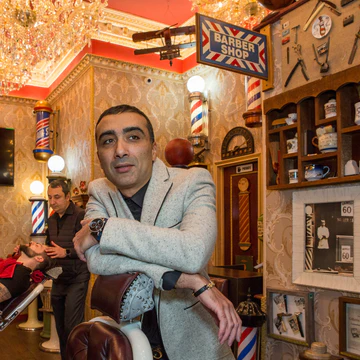
Ramesh was born in Bangalore to a family of five. His father, P. Gopal, used to run a small barbershop on Brigade Road, Bengaluru. Ramesh lost his father when he was seven and saw the beginning of turmoil in his life at a very tender age. With no breadwinner in the family, her mother took charge of raising three kids and worked as a servant at various houses to feed her children. She also rented out the barbershop her husband left her for Rs.5 per day, as she couldn’t run the shop alone.

As Ramesh turned 13, he began contributing to the family income by doing various jobs, such as newspaper and milk delivery. He continued his studies until the 10th standard but later quit to manage the family shop full-time. He transformed an ordinary barbershop into a stylish hair salon called "Inner Space." Ramesh realized that he needed to expand his arms in business to give his kin a better life. So, with the salon’s savings and help from his uncle, he bought a Maruti Omni Van and rented it out since he couldn’t drive the vehicle due to lack of time.

The Omni Van was a turning point in Ramesh's life. His first business contract opened his mind to the full potential of the business. Over time, the vehicular fleet grew larger and more impressive. It became even more luxurious with the addition of its first elegant vehicle, the Mercedes E Class Sedan, which cost Rs. 38 lakh. Today, Ramesh Babu is not only the proud owner of a salon but also of Ramesh Tours and Travels. He rents out a wide range of vehicles, totaling up to 400, from top-end cars and buses to more common models. The fleet includes dozens of Innovas and BMWs, as well as luxury vehicles such as the Rolls Royce Ghost and the Mercedes Maybach.

Although he is a billionaire, he still spends a quarter of the day in his salon looking after his clientele. In addition to being a billionaire barber, he is also an inspiration to all entrepreneurs who doubt their abilities or lack the motivation to dream big and achieve great things.

The situation is quite similar in another region of the world.

Arthur Rubinoff is a fourth-generation Master Barber who is carrying on the legacy of his father, grandfather, and great-grandfather. When his father, Rubin, an immigrant from Uzbekistan to the US, passed away, the business was passed down to his 14-year-old son along with some of his father's barbering tools. Rubin used to collect tools from different shops and had a dream of opening a Barbers’ Museum. Motivated by a deep desire to honor Rubin's life, Arthur created a space as a tribute to his family and the industry.

The space, now named "Intimate Space," is located on a busy street in Manhattan and catches the attention of passersby with its variety of antique poles and old-school barber decorations in the windows. Arthur, who already owns a full product line and a chain of barbershops, quickly became very famous in his trade.

As you know, barbershops are an interesting place. They provided more than just haircuts; they were places where stories were passed down.

"A lot of people don't know that barbers used to perform minor surgeries back in the day. They used to do bloodletting and minor surgeries such as bullet removals. And a lot of people don't know that barbers carry history, and I think barbering is not just a vocation; I think it's an artistry," says Rubinoff.

For the past 15 years, Arthur has been building a collection of antique equipment—dryers, clippers, chairs, etc.—to capture the history of the barbering industry in America.

The NYC Barber Shop Museum, located in Manhattan's Upper West Side, was opened to the public in June 2018. It offers a blend of nostalgia, hair history, and the opportunity for a fresh cut. Whether you're a barber enthusiast or someone interested in unique New York cultural experiences, this museum is worth a visit!

The museum showcases a diverse collection of items, including a 1900s steamer and sanitizer machine, a toddler's chair, and one of the first blow dryers from the 1930s. Moreover, the museum operates as a store offering contemporary men's services within a historical environment.

Perfect social consciousness is the hallmark of Arthur Company's projects as they donate a portion of the proceeds to a children's hospital. They also engage in similar charitable activities.

UNICEF proclaimed World Barber Day on September 16, 2017, to support efforts in protecting and educating children globally!

"No matter what life throws at us, we can always find beauty in the world around us. Often, that beauty is found in the way we persevere. Let's seek out the beautiful opportunities that empower us and help us overcome any obstacles standing in our way".


เดฏോเด—ി, เดญോเด—ി, เดฐോเด—ി.

เดฏോเด—ി, เดญോเด—ി, เดฐോเด—ി . (เด†เดฐോเด—്เดฏเดค്เดคിเดจ് เด’เดฐു เดชเดดเดž്เดšൊเดฒ്เดฒ്!) เด‡เดจ്เดจเดฒെ เดตൈเด•ുเดจ്เดจേเดฐം เดžാเตป เดŽเดจ്เดฑെ เด†เดฐോเด—്เดฏเดธ്เดฅിเดคിเดฏെเด•്เด•ുเดฑിเดš്เดš് เดŽเดจ്เดฑെ เดธുเดนൃเดค്เดคാเดฏ เดกോเด•്เดŸเดฑുเดฎാเดฏി เด•ൂเดŸിเดฏാเดฒോ...