April 25, 2024

The Woods and a Song


                                       The Woods and a Song


                       The woods are lovely, dark and deep.

                        But I have promises to keep,

                        And miles to go before I sleep,

                        And miles to go before I sleep.

These are the famous four lines taken from Great Poet Robert Frost                   ( 1874-1963 )famous book  “Stopping by Woods on a Snowy Evening".

I have read years back, that Jawaharlal Nehru have kept on his bed side

this book of poetry , specially underlining the above four lines. And that the last two lines were marked boldly and kept in his Study.  Perhaps he must be remembering before he slept the dreams he had to complete and slept eternally,  remembering those last lines ! 

Robert Lee Frost was an American poet and a most revered literary figure. He was a Pulitzer Prize winner for his writings four times.

‘Stopping by Woods on a Snowy Evening’ is easy enough to summarise. Frost passes some woods one evening during winter, and tells us that he thinks a man who owns the woods lives in the village some distance away. So the owner will not notice Frost stopping by to observe the snow falling upon the trees.

Next, Frost tells us that his horse probably thinks it odd that its rider has chosen to stop here, with no farmhouse around. What, surely they can’t bed down for the night here? As if registering its disbelief, the horse shakes its harness-bell as if to prompt an explanation from Frost. Everything else is silent around them, apart from the soft wind and the slight sound of snowfall.

Frost concludes ‘Stopping by Woods on a Snowy Evening’ by telling us that, lovely, dark, and inviting as the woods are, he has prior commitments that he must honor, so he must leave this place of peace and  tranquility and continue on his journey before he can sleep for the night.

Frost died in 1963 at the age of 88, whereas Nehru left us in 1964 when he was 75 . The poem Frost wrote at a stretch in a night of1922 and was published an year later,  reminds us the reader,  the song has completed  one hundred years ! 

John F. Kennedy, the most famous late President of United States was an ardent admirer of Frost. Frost got an invitation from the President to recite this poem on his inaugural speech and ceremony . However, he could not as the hot rays of Sun that fell on the draft paper prevented him from reading the Poem. Instead he recited from memory another poem he wrote two decades back, ‘The Gift Outright’. It said, ” Before  we belong to this country, this country belonged to us”.

Kennedy was more impressed on this poem earlier too, true to his commitment and dedication to the Nation. And this event and the presence of a poet has become a practice thenceforth at the inaugural ceremonies of future Presidents of USA!

Two Giants of men, nay three; the world is poorer by their absence !

                   ===============================================


April 23, 2024

A Flight to Maharshi Valmiki…


A Flight to Maharshi Valmiki…

कूजन्तं राम रामेति मधुरं मधुराक्षरम्।
आरुह्य कविताशाखां वन्दे वाल्मिकि-कोकिलम्॥


Kujantam Rama Rameti Madhuram Madhurakshharam.
Aruhya kavitashakham vande Valmiki-kokilam ..

I bow and prostrate to the cuckoo-like Valmiki who was always cooing the sweet and sweet-lettered sounds ‘Rama, Rama’ and thus ascended the pinnacle of poetics.

More than 2700 years ago, Maharishi Valmiki has got this salutation or acclamation. For us he is Adikavi- the first poet. The great epic or Itihaasa, Ramayana has inspired and influenced generations together and continue to do so.
It was told that author of Ramayana, led the life of a robber before he became a sage. Scholars have different opinion regarding the early life of Sage Valmiki – a group suggests that he lead a pious life from the beginning but others stick to his early life as a robber. It is said that in his early life Valmiki was known as Ratnakara. It was a meeting with Sage Narada that changed his life. Let us leave the known story here.

Now, to the joy and pleasure of writers, poets and the common folk we have an Airport and the name of that happiness is   "Maharshi Valmiki International Airport", at  Ayodhya.

The airport has been designed to portray the local, as well as the state's culture and heritage, in order to make the visitors know about the spiritual, religious and historical influence the city of Ayodhya wields on the Indian society. The designs are etched as murals, artworks and engraved scriptures adorning in the Nagara style of temple architecture, depicting the symbolism of the epics of Ramayana and Mahabharata. The architectural style has been adopted also to symbolise the Ram Mandir. The "bow and arrow" mural with portraits of Rama of near the terminal's entrance along with other artworks are one of the prime themes in the exterior. Built with red stone, the carved pillars from the entrance to the inside of the terminal provide an excellent mixture of the old temple architecture with modern infrastructure. The roof of the terminal, measuring 65,000 sq.ft., is supported by seven big columns, symbolising the seven kandas (books) of Ramayana. Like ancient temples, the terminal has a rectangular base with carved pillars and a shikhara on its top to symbolise a temple structure. The terminal uses clean energy to generate electricity and follows sustainable measures to dispose waste, conserve water, and hence, is an eco-friendly airport.* ( source : wikipedia )

Hope that once fully operational, Maharshi Valmiki Airport will
be one of the best on International standards.

Some other interesting facts:
We have world's first Airport in South Yorkshire in the name of
Robinhood , a fictional character, on the Nottingham-Yorkshire
border,  made to cater the Forces during the World War 1, in 2015.

The name of the Airport was changed to Doncaster Sheffield
Airport in 1916, but it did not survive long due to heavy losses
and closed; perhaps a curse said to be associated with Robinhood mania !

Robin Hood is a legendary heroic outlaw originally depicted in and subsequently featured in literature, theatre, and cinema. According to legend, he was a highly skilled archer and a swordsman.  Traditionally depicted dressed in Lincoln Green, he is said to have stolen from the Rich to  serve the Poor.

We have a different near non-fictional character in James Bond, created by Ian Fleming, the famous British Author. Strangley enough we have an Airport in Jamaica in his name too, just because Fleming settled down there after purchasing a large property near the beach naming it as James Bond Beach next to the Airport.

There is another Airport in the name of Franz Kafka (1883-1924 )
 German speaking Jewish Novelist in Prague. Like in his writings the situation there is said to be piercing and delusionary and of chaos. Prague's Kafka International was named the Most Alienating Airport 
for customer relation and satisfaction rating.

Nikos Kazantzakis was a Greek writer, journalist, poet, philosopher   (1883-1957). Widely considered a giant of modern Greek literature he was nominated in nine different years for the Nobel Prize for Literature and remains so to the most translated Greek Author worldwide.
Heraklion Airport is Crete’s main gateway to the world. Officially known as the Heraklion Nikos Kazantzakis International Airport, it it is one of the largest airports in Greece.
It is also the second-busiest airport in the country, servicing millions of tourists to Crete, especially in the summer months.

😄


April 20, 2024

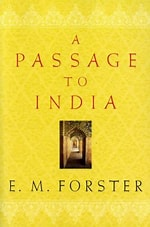
A Passage to India-- Centenary year of a Novel


A Passage to India- Centenary year of a Novel.

  As part of academic curriculum most of us would have read  the famous  novel  “ A Passage to India ‘’ by the English author E.M.Forster.  It is the Centenary Year of this Novel, published on 6 th of April 1924. Though nominated for the Nobel Prize  22 times each time, Forster was not lucky enough to get the award. However, ‘A Passage to India ‘ was selected  as one of the 100 great works of 20th century English literature by the Modern Library and won many other Prizes for fiction. Time Magazine included this novel in its “ All Time 100 Novels” list.

The novel is set against the backdrop of the British Raj  and the Indian Independence  movement in the 1920s. It is based on author’s experiences in India, and derived the title from another famous writer viz.  poet Walt Whitman’s  poem of the same name –A passage to India.

Long before Forster first visited India, he had already gained a vivid picture of its people and places from a young Indian Muslim named Syed Ross Masood, whom Forster began tutoring in England starting in 1906. Forster and Masood became very close, and Masood introduced Forster to several of his Indian friends.  By the time Forster first visited India, in 1912, the Englishman was well prepared for his travels  throughout the country.

Forster began writing A Passage to India in 1913, just after his first visit to India. The novel was not revised and completed, however, until well after his second stay in India, in 1921, when he served as a private secretary to the Maharajah of Dewas State Senior. Finally published in 1924, A Passage to India examines the racial misunderstandings and cultural hypocrisies that characterized the complex interactions between Indians and the English toward the end of the British occupation of India.

The story revolves around four characters: Dr. Aziz, his British friend Mr. Cyril Fielding, Mrs. Moore, and Miss Adela Quested. 

The story in brief :

 *A Passage to India is set in the city of Chandrapore. The initial segment, titled Mosque, features a group of Muslim friends conversing about the challenges of forging friendships their British overlords. A surgeon named Dr. Aziz is among the group and later has a significant encounter with Mrs. Moore in a mosque. The mosque exchange strengthens their bond, and Mrs. Moore introduces Dr. Aziz to a younger friend, Miss Quested, who is planning to marry Mrs. Moore's son Ronny.

Numerous efforts are undertaken to foster understanding between the Indians and the British including a clumsy, hybrid "bridge-party" at the English Club; Aziz's short-lived camaraderie with a junior officer during a polo game; and a unique gathering featuring the Muslim Aziz, Hindu Professor Godbole, Mrs. Moore, and Mrs. Quested at a tea party hosted by Fielding. The tea party's relative success encourages Aziz to extend an invitation to everyone in attendance to join him on a forthcoming trip to the Marabar Caves.

Miss Quested initially chooses not to marry Ronny Heaslop, but later reconsiders and the two become engaged. Miss Quested and Ronny are involved in a car accident which ultimately strengthens their bond and leads them to share the news of their engagement with Mrs. Moore. Meanwhile, at an event attended by Aziz, Dr. Panna Lal, and others, underlying tensions between Muslims and Hindus surface, despite the appearance of courtesy and decorum being maintained.

In the second section, The Caves, Aziz's journey to the Marabar Caves begins. Fielding and Professor Godbole are delayed, leaving Aziz to accompany the two women alone. Mrs. Moore becomes disoriented in the caves and leaves, while Aziz and Miss Quested continue. However, after an irritating question from Miss Quested, Aziz goes into another cave. Upon leaving, he sees her far away and makes up a story when Fielding, who has just arrived, inquires about her. Back in Chandrapore, Aziz is arrested on Miss Quested's accusation of attempting to "insult" her in the caves, a term that implies a sexual advance or assault.

The British community is outraged and incensed and Aziz is denied bail. Fielding's efforts to converse with Adela Quested prove unsuccessful. Mrs. Moore chooses not to stay in India for the trial headed off to England on a ship. Miss Quested insists on Aziz's innocence to her fiancé, but Heaslop takes no action. When Miss Quested testifies at the trial, she admits that she was wrong about the alleged attack.

Following Aziz's release, Muslims hold a celebratory procession. Fielding comes to Miss Quested's aid by escorting her to his garden home. Here, they discover that Mrs. Moore passed away at sea before the trial. Ronny Heaslop calls off his engagement with Adela, who departs for England. Fielding resigns from the Club. Aziz starts to doubt Fielding, suspecting that he aims to prevent Miss Quested from providing compensation and even that he is secretly involved with her.

In the concluding section, titled The Temple, several years have passed, and both Professor Godbole and Aziz reside and work in the Native State of Mau, governed by an elderly Rajah. The segment begins with Professor Godbole, now Mau's minister of education, and transitions into the Gokul Ashtami festival, which commemorates Shri Krishna's birth. At the event, Professor Godbole performs a dance to honor the deity and fondly remembers Mrs. Moore.

Aziz, believing that Fielding married Miss Quested, declines to read his letters. When Fielding, as the education inspector, comes to visit, he tries to reconcile with Aziz, clarifying that his wife is actually Stella, Mrs. Moore's daughter. Stella and her brother, Ralph, have accompanied Fielding to India. Initially, Aziz behaves harshly towards Ralph, but his memories of Mrs. Moore make him change his attitude. Meanwhile, the Rajah has passed away, but the news is kept secret.

Aziz and Fielding go on a final ride together, rekindling much of their previous closeness. However, Aziz maintains that India must achieve independence from Britain, a sentiment Fielding disagrees with. Despite their desire to be friends, the historical context prevents a true friendship between them.

  It  took 11 years to complete the novel, considered to be  a semi-autobiography of the Author. ‘A Passage to India’ was dedicated to :  “Syed Rose Masood and  17 years of our friendship.’’

‘A Passage to India ‘ has survived 100 years and even now sought after by book lovers all over the world.!


April 11, 2024

One Story, Two Perspectives


One Story, Two Perspectives

(  Good to re-read this article even though you may have read it before)

A famous book writer sat in his study. He took out his pen and began to write:

“Last year, I had surgery to remove gallstones. I was bedridden for a long time.

In the same year, I turned 60 and was retired … quitting a company that I loved so much. I had to leave the job I've been doing for 35 years.

That same year I was abandoned by my beloved mother who passed away.

Then, still in the same year, my son failed his final medical exam because of a car accident. Repair costs from the car damage marked the peak of bad luck last year.”

At the end he wrote:

*“What, what a bad year!"*

The writer's wife entered the room and found her husband who was sad and pensive. From behind, the wife saw the husband's writing. Slowly she backed away and left the room.

15 minutes later she came back in and put down a piece of paper with the following words:

“Last year, my husband finally managed to get rid of his gallbladder which had been making his stomach hurt for years.

That same year, I am grateful that my husband was able to retire in a healthy and happy state of mind & body. I thank God he was given the opportunity to work and earn for 35 years to support our family.

Now, my husband can spend more of his time writing, which has always been his hobby.

In the same year, my 95 year old mother-in-law, without any pain, returned to God in peace.

And still in the same year, God protected our son from harm in a terrible car accident. Our car was seriously damaged by the accident, but my son survived without any serious injuries.”                               

In the last sentence his wife wrote:

*“Last year was a year full of extraordinary blessings from God, and we spent it full of wonder and gratitude.”*                                    

The writer smiled with emotion, and warm tears flowed down his cheeks. He was grateful for a different point of view for every event he had gone through the past year.

 *A different perspective of the same events now made him joyful.*

Friends, in this life we ​​must understand that it is not happiness or joy that makes us grateful.

 It is *gratitude that makes us happy/joyful*!

 Let’s practice seeing events from a positive point of view and keep envy away from our hearts.

*”We can complain because rose bushes have thorns, or rejoice because thorn bushes have roses.”*

*Abraham Lincoln*


*( Courtsey  -Whatsapp  group)

April 05, 2024

Dasharatha, the King of Ayodhya- a lessor known story .


         Dasharatha, the King of Ayodhya- a lessor known story .


  We all know and most of us have read many times the epic, Ramayana. And more on Rama the central character and of Ravana’s abduction of Sita and eventual defeat and death at the hands of her husband Rama.

  However, little is known about King Dasharatha of Ayodhya– Lord Rama’s father.

  Manu, the famous King of the Suryavansh (descendants of Sun God) and his wife Shatrupa were deprived of a successor and hence undertook severe penance in the forest in order to be blessed with a son. Maha Vishnu, pleased by their ardant penance and devotion appeared before them and blessed with a boon by granting their wish to be born as their son.

  The Suryavansh or Ikshavaku dynasty was famous for their bravery, steadfast fulfillment of any vow or promise, adherence to truth and concern and above all well being of their subjects. Great Kings like Ikshavaku, Mandhata, Bhagiratha, and Raghu belonged to the Suryavansh dynasty. Their capital was by tradition in Ayodhya, situated between the present day Lucknow and Varanasi near Faizabad besides the river Sarayu.

  Dasharatha was born to King Aja of Kosala and Indumati of Vidharba of , Ikshvaku or Surya vansh dynasty. The real name of Dasharatha was Nemi. Once the mighty and invincible Asura Śaṃbara conquered the throne of Indra. At the request of Brahma and the gods, King Nemi reached heaven and destroyed the armies of the asuras very easily and recovered the throne back to Indra. Saṃbara got angry, assumed ten shapes and attacked the King from ten points at the same time. The king confronted the ten Saṃbaras at ten points, at the same time, and killed all of them at the same moment. Because he faced his chariot to ten points at the same time and fought with enemies on those ten points Brahma appreciated his valiant fighting and charioteeering and gave him the name 'Dasharatha' (one who is capable of driving the chariot to ten points at the same time). Thus his original name was forgotten and he came to be known only by the name Dasharatha.

  It was also told that as the King Dasharatha had great control over his ten senses, ( Jnanedriyas and Karmedriyas ) he is known as Dasharathi. He was equal to, and or even greater than Indra (Lord of the heavens or the Senses) in valor.

  Despite hailing from an illustrious lineage and ruling over a vast empire Dasharatha remained detached from materialistic possessions nor did he indulge in pleasures from such a state. He was focused on performing his duties, expanded his kingdom, reigned justly maintaining peace and harmony over his vast kingdom. When such a person is at the helm, prosperity follows forthwith.

  However, he was unhappy and sadly aware that he was now old and childless inspite of having devoted three wives - Kausalya, Kaikeyi and Sumitra. On the advise of Vashishta and with the help of Sage Shringi from Angadesh the king organized the Putrakameshti Yagna (a fire sacrifice for obtaining a son). Agnidev (the god of fire) appeared himself through the flames of the Yagna and offered a bowl of Kheer (a milk pudding) to Dasharatha. This was distributed to the three queens, and as a result, in due course Kausalya gave birth to Rama, Kaikeyi to Bharatha and Sumitra to Lakshmana and Shatrughna.

   Dasharatha’s eldest son Rama was the seventh incarnation of Lord Vishnu. This was how Lord Vishnu fulfilled the wish he had granted to Manu and Shatrupa by taking the incarnation of Rama who was His Poorna, complete Avatara.

  Years later, King Dasharatha decided to let his sons take over the reigns of Ayodhya, and wanted to crown Rama as his successor and next King.

  But then alas, fate ( or divine desire) played a part in the form of Queen Kaikeyi’s personal maid, Manthara who was a very sharp and wicked lady. She went to the queen and told her that this decision was unjust and Kaikeyi’s son Bharath was more deserving and should be crowned king instead. She poisoned her mind in reminding Kaikeyi of Dasharatha’s promises . Once during the war with Asura Shambara, the King fell to the ground unconscious and she drove the chariot and saved the King. The king was very much pleased, grateful and granted her two boons. This was the opportune time for her to reclaim those two wishes.

  Kaikeyi was influenced by Manthara’s devious plan and under her evil advice, Kaikeyi reminded Dasharatha, to crown Bharata as king and send Rama into exile for fourteen years to the forests.

  King Dasharatha, fell down and became unconscious when he heard Kaikeyi’s demands, and vaguely remembered of an incident from his own youth and knew that his life is to end soon.

  As a young prince, he was out for hunting one evening. Shravana Kumar, a young ascetic was collecting water in a pot for his parents who were both old and blind. When Dasharatha heard the sound of the pot being filled with water, he mistook it for the sound of an elephant drinking water at the river. Using just the sound cue, he aimed the Shabd Bhedi (based on sound) arrow in that direction, felling Shravana Kumar that killed him. The blind parents who heard this sad incident narrated by the king, and who were completely dependent on him, could not control their anger and cursed Dasharatha, thus: “We are giving up our lives forever to the loss of our dear and only son. You will also die of grief at being parted from your sons.”

  When Rama heard the promise made by his father to Kaikeyi, he readily agreed to leave for the forest. Lakshmana and Sita accompanied him. After they left, Dasharatha was so sad and grieved, that he soon breathed his last.

  In the forest Rama killed Khara, Dooshan, the demons. Lakshmana cut off Shoorpanakha’s nose, Ravana took Sita away. Rama, with the help of Sugreeva, Hanuman, Jambavan, and Angad, and Vibhishana built a bridge over the sea and killed Ravana in a fierce battle. And anointed Vibhishana, the King of Lanka. Rama along with Sita and his entourage of Vanaras and Vibhishana returned back to Ayodhya. The coronation of Rama as King of Ayodhya was conducted in splendour to the joy of whole of Ayodhya.

  The glorious deeds of his son Ram and his divine life have made Dasharatha immortal in history and lore.

  His rule over Ayodhya, a place of no conflict, symbolizes the peace one finds through self-control. Dasharatha's story encourages us to conquer our inner struggles to lead a harmonious and fulfilled life.

 Tailpiece:

The tomb of Dasharatha is in a village of Faizabad about 15 km away named Bilhar Ghat besides bank of river Saryu where he was cremated. This place is highly devotional for Hindus.


March 31, 2024

WHAT IF THIS IS HEAVEN ?


 The debate , as to whether a person will go to Heaven or Hell have never ceased to exist  in our  belief system  of Religion.

 If life is about the journey and not the destination, could it be

 that this is heaven--this physical life we are living here on

 earth ? What we experience in our daily lives often feels like

 anything but heaven!

ANITA MOORJANI, the Author of this book, WHAT IF THIS IS HEAVEN puts her thoughts and can be read as a piece of basic philosophy.

  At a deeper level, the book can serve as a guide or a path to living a life full of morals, respect, dedication, and goodness, irrespective of the religion or faith that you profess or believe in. 

We need more books like this to help the younger generation understand, where we are lacking in leading a better and balanced life. Our elders may not have had the material comforts that we now consider for granted. But surely they led a more content life and were in close proximity with their spiritual strengths “ says Brian Griffith

This book highlights the common myths in 10 chapters that

 most of us have accepted as truth. Each chapter has section

 called “ Living Here and Now” , Tips and Exercises, Questions

 to Ask Yourselves and possible solutions.

The Chapters ( Myths ) are:

1.   You  get what you deserve

2.   Loving yourself is selfish

3.   Real love means anything goes

4.   I’m Not okay, you are Not okay

5.   Health care cares for our health

6.   It’s just a coincidence

7.   We pay for our sins at death

8.   Spiritual people don’t have egos

9.   Women are the weaker sex

10. We must always be positive

   Books like these awaken the mind, uplift the heart, and give its readers a purpose and meaning in their respective lives.

   The book is definitely not something that can be read like a novel or a piece of journalistic non-fiction. It is something that has to be savored with great patience and care. The book is definitely worth your time and the effort that you will put in to read it from cover to cover.

      This  book is a must read and to be  kept in your personal collection.

*About the Author :  Anita Moorjani is the New York Times best selling author of Dying to be me is an account of her nearly four year battle with cancer that culminated in a fascinating and moving near death experience , which vastly changed her perspectives on life. Before becoming an author and international speaker,  she worked in the corporate world. She is multi lingual personality because of her upbringing and now lives in United States.

More details:

Name of the Book  -  What If This Is Heaven ?

Author                     -   Anita  Moorjani

Publisher                - Hay House India              

Year of Publication   -  2016

Genre              - Nonfiction · Spirituality · Self help. Inspirational        

Paperback                -  180 pages

ISBN                           -978 -93-85827-31-0 : ‎ 

Price                           – INR 350


March 28, 2024

Musings .... Recollections..4


 ‘A very pleasant day. Will make a visit to Krishnamurthy’s House’ thought Ramamurthy and readied his wife and son and shortly reached his house.  Krishnamurthy and his family was planning to watch a not so popular movie having nothing else to do. It was just then Ramamurthy with his entourage knocked at the door. The hosts keeping aside their resentment,  welcomed the guests inside and to be seated. Much before they were settled, Ramamurthy’s son rushed to the half- opened glass showcase and took the heavy idol of Ganesha made of clay. No sooner he lifted, it slipped from his hand and broken to umpteen pieces.

Hiding aside their anger, Krishnamurthy and wife showed a smiling face, said: Oh…, it is ok, he is a child, let him play. And the boy goes for his next act; but his parents does not bother about him or his misdemeanors.  . Rather smiled and appreciative of his adventures. They stayed there with coffee and snacks for more than two three hours and left. Just then Krishnamurthy's  wife  burst out of the boy’s act and his parents behavior in promoting the destructive activities of the child.

   There are children who behaves exactly opposite to this boy. Before entering the guests’ home they keep the footwears outside the door, walks slowly to occupy the seats without a murmur. When drinks are served the English medium child  take it obediently and says ‘ Thanks’ to the host. He picks up instantly a towel or plate in case it falls by chance from the host and gives him and utter ‘welcome’ for the anticipated thanks. When he leaves with his parents, individually salutes the hosts too, before reaching the gate.

Of the two boys, I am sure you would like the latter most without saying. But remember one thing. The first one is uncontrollable and beyond every conceivable law. He uses his might and will power freely and  does whatever he wants to do. However, when grows up he will not be selfish and will help the needy to the utmost even if he has to spend from his pocket. The second one will be in parents hold and within the iron rule made out for him in their home. He may not even taste a cup of tea from the outside nor will spend to board a bus rather prefer to walk back home. He will swallow the cold water served as coffee made  by his wife silently. His bank balance will  increase substantially whereas the first one will be running around for loans from bank.

You may notice that many of the moral policing volunteers belong to the second category who had grown up over the years. For them only laws matter. If one such fellow become a teacher he will give his student 49 marks only instead of the pass mark at 50, because for him rules are the Bible. He might even have kept a calling bell in his bed room and allow his wife when the bell rings twice and when his purpose on her is over bell will ring again so that she may go and sleep with her children soon.  Before leaving to office, he may allot one hundred rupee for her for the purchases of provision, and ironing his dresses etc.. and call for the balance or account when returns from office.

Don't you think that Life will be  miserable and lost if such moral advisors are in society and run it with no resistance !  *


* ( The subject idea adapted freely from Periodicals and essayed by Late Prof. Krishnan Nair, Author and renowned Litereary critic. )

March 25, 2024

One among them.. Me too

 One among them.... Me too

Nowadays seeing and interacting with people has become almost nil. There was a time when I am in native place, the first question comes from the person with a smile I meet was " Oh, mm.. has come on leave ? when is the return ? Heard that there is water scarcity in your city !" I often wonder to which question should I answer first or can it be with a smile, pass the test and move away ! The times have changed and they too are calm by themselves down. No more questions and a stare look or half a smile answers all from both the sides, if at all some recognize me !
Yesterday, I had to go to the bank in the after noon. Parked my vehicle near the shades and with difficulty climbed the stairs to the first floor. From there watched the side road and saw a tired old lady opens a packet full of biscuits to a stray dog while other two came running to get their share. No wonder the dogs in town are fat and healthy ; they are getting enough food. Therefore, there is no anxiety or impatience in them that a dog should naturally feel. She too, of a grandma's age very happy and talks to them as if to her own wards. When I came out from the Bank ,saw a dog slowly eating the biscuits lying in front of me on the footpath waggling the tail, not howling at the stranger. While I was about to enter the Car, a sound came from behind, saying :
"Sir, I am thirsty ,will you give me some money to have a cool drink from the shop ?"
When I looked, it was that old grandmother I mentioned earlier.
I looked at them closely and asked her,
"You bought the biscuits for the dogs and you didn't have enough money for the drink! Isn't that enough for your own business?"
I'll give it to you, but how much do you want?"
"Ten rupees ..?"
"Okay, but isn't this money too ,to buy biscuits for the dogs?!
Isn't that the truth?"
A small smile appeared on his lips and then disappeared.

She answered quickly with a smile and half- closed sunken eyes :
"I was a person who was around serving a lot of people nearby this place. Back then, everyone wanted me to cook and other domestic service to them. Now , when I became tired and sick no one wanted me. I have seen a lot of money and don't want anything in return. There is no one, likes me...these dogs loves me than my.....! She could not complete with chocking throat..
.
For a minute I was stunned, as if watching a movie where a scene of hyper-emotion came between joy and mischief or misery. Then, automatically extended the money.. no more questions to ask for..
There is only one thing a man needs until he departs this world.. Consideration, compassion and some love to make others cheer or laugh. Even if it is something that can be given without spending money , we will be stingy with it as much as we are stingy otherwise too ! Without thinking about tomorrow !😟

March 21, 2024

Musings..... Recollections..3


Most of us often travel by Bus, Train or Airlines . You can distinctly notice the way people behave too. If by Air, the moment boarded and seated your neighbour takes a book or Notepad or some periodicals
and casually turn the pages or drowned to it as a serious reader never bothered about surrounding and abhor his neighbour as his borne enemy. Same is with the fellow travelling in the Train specially if it is in a higher class, because others for him is of ‘Cattle Class’. In bus you might have noticed the two passengers continuously blabbering at high decibel. This is definitely not civility and can ever be tolerated. All are equal in the society and have the right to their given spaces. Each of us has one or the other gift or knowledge in their field. A teacher is an expert in teaching or a weaver in his craft, so is a farmer in his area of farming. As each one of them is equal , there is no business for the other person intruding by speaking loudly and disturb, the calmness or privacy being enjoyed by his co passenger.

“ As per tender conditions, EMD of Rs. One lakh to be submitted ( in Bank draft / pay order only) along with other documents “ but ABC Constructions has given an undertaking that they will give when the tender is finally awarded. Both the Secretary and Vice Chairman wanted the Note to be put up recommending him for the Job. I put up the Note pointing out the said condition and my superiors were unhappy with me.” Said the Section head. This may be genuine and correct but he has no business to talk in loud mouth and to continue this type of talk in a common place either in bus or train etc..

The state of the mind and conscientious of a person has different meaning, real or unreal of self- creation, and spontaneous.
The talk above comes under plain vanity. Nobody, of course can be expected to behave in uniformity, however conscience of the surrounding or their status.

There was a Speaker who delivers to his audience spell bound on the subject seriously, but will continue to do so not looking at the watch but calendar. He will stop only when the audience starts howling and dispersing . The story goes that when in a union meeting, in spite of the Minister appealing for ending the prolonged strike, he could not succeed. And as a last resort Minister told them that he is inviting Mr..... to speak before you. It worked instantly, the staff and workers rushed back to their seats with all the energy and spirit left in them!

There is a humorous story once read about Abraham Lincoln, the great President of USA. He was once attending the speech of a Bishop . After two long hours when he concluded the speech, Lincoln met him and told “ I have a book where all the words you spoke about is in my home”. Bishop was angry and retorted,” No , every word uttered by me is mine only and not stolen from somebody. Let me seek the book you referred and give it to me.” Lincoln promptly and purposely send thro the book to him. When the Bishop curiously and breathlessly opened the packet it was a big English Dictionary with more than 3000 pages.!!
😄


March 15, 2024

Musings....Recollections - 2


    Fidel Castro ( 1926-2016 ) was a great  revolutionary  world leader  from Cuba. His beard is synonimous with his stature. Castro the man as a political reality he represents is replaced more by the beard. 

C.I.A made certain infamous  attempts to deface the beard of the leader which was confessed before the Congress. Their plan was to mix certain chemicals into the cigar which Castro regularly used. If it was found out  and proved,  they were certain about death sentence by the law of the land ! What does it mean? They believed his power will be reduced to zero in absence of the beard! Is he not the man and the spirit behind all the social and political upheavals and development of the nation-Cuba. Alas, but the ' media' has given a different image of the person giving more importance to the beard !

It was in 1977, the lady correspondent of a leading newspaper interviewed Castro with bold question : Sir, will you ever come in public shaving away the beard?  Knowing fully aware of the undue importance given to his beard by the media, he said: Do you know why we are not removing the beard ? It is because we are unable to get razors. Times have changed. Guarrilas were recognized by their beards alone. Moreover,  it was difficult to intrude spies into our team. Beard takes a longer time to grow and hence it served a purpose. And it has become a symbol too.

Anastasio Somoza ( 1896-1956 ) was the President of Nicaragua and he had strange and fiery wish. Somozo asked his troops before proceeding to capture 'Bay of Pig' , at least to bring a hair from Castro's beard.  The Cuban anti revolution troops of Somoza miserably lost the adventure and Somoza was shot to death. Nobody asked for his body parts. When Castro addressed on the first Annual celebration at  Nicaragua he roared: Somozo wanted only single hair of my beard. I am before you with my full beard to the people of free Nicaragua from the terrorism.

One can see how the media's imagination and views destroys the sense of Truth in this context and is a lesson for the present too !


..Musings.. recollections ..


😊


One evening   Emperor Asoka, in Pataliputra,   was standing  aside  the  great river Ganges with  the retinue of his ministers and military forces. He was watching gracefully the force with which the river was flowing and suddenly asked his ministers’--

“ Who  can reverse the flow of this great Ganges upwards?.

As is expected came the reply ‘Nobody can do so, sire’.

 Bindumati,  a whore standing nearby the river who overheard the conversation, with due respects to the Emperor told, “Maharaj, I am a whore and make a living on my beauty. Having my truthful and sincere service to the community, I am sure of  reversing  upwards the flow of the Ganges.” No sooner than she had completed the roaring Ganges resumed  flow  upwards.  

 Aghast and surprised the Emperor asked   “what is the secret behind your action.

  The power of truth” came the reply.  “ Maharaj, whoever gave me  money , I  do not  look and differentiate them as to whether he is a Brahmin, Khastriya,  Vysya or shudra.   I render my service sincerely and truthfully and that is my strength,  having received the wages.

Each one has to follow the Dharma in their work and that is the meaning of Truthfulness.

( From “ Philosophies of India –By Heinrich Zimer/ Joseph Campbell )

2. Yajnadatta was bitten by a poisonous snake. His parents took him to a saint and reverently appealed him to save their son. He avoided them saying that he is not a Physician. But the parents  pressurised him use his  power as a saint. He has agreed and put his hand on Yajnadutta’s head and prayed saying that he had lived his life truthfully only  for the last one week and balance fifty years was against his conscience. Let the boy survive if there is any truth in my actions. Poison has receded to the ground partly as the child vomited. The father of the child said, “ I lived  hating  people coming to my house and neither the saints nor Brahmins were welcome there. If there is truth in my words, let my son survive.” Then it was turn of the mother. She prayed and said “ Oh my son, I hate your father more than the snake which bite you, though I hesitate to tell the truth in the presence of all. If what I said is true let my son get his life back.”  The full poison came  out of the body of the child and he walked away as if from a good sleep.

( It is the power of truth which is above every thing )

 3. Question : Is it sin to tell a lie?

   Answer: Not necessarily so  every time. Jean val jean was running for life, chased by the Police. He entered the Chappel and hid behind a door in the room  where a Sister was praying before the Altar.  The Police Inspector who followed him entered the Chapel and enquired the Sister, ‘ Are you alone in this  room? “ Who else can be,  when al I am praying alone before my Lord’’ retorted the Sister.

 The Police turned back and gone.

 Victor Yugo in his famous novel “ Les Miserables” writes: The Sister deserves to be anointed as a saint though she told a lie.

4. Bertrand Russel was walking on a village path alone. He saw a jackal,  very tired and forlorn was trying to run with all the energy left in its command. The hunter who was following the jackal asked  Russel,’  Have you seen a jackal  ‘ Oh, Yes . It has just ran away in that direction’  said  Russel to them and save the animal.

 Later he tells us : I do not think I should have been a better man if I had told the Truth.

( The conquest of Happiness - Bertrand Russel )


5. British soldiers were taking   Napoleon to Helena Island in their  ship. During the dinner time Napoleon saw the Captain of the ship Mr. Write   and asked him,  “ Are you the relative of the person whom these people accuse of me,  strangulated and killed.” 

“ Yes, sir” said the Captain, “ And will you now  explain  how Mr Write Sr. was killed who was under your custody in Jail” .  Napoleon ” Sure I will tell” and continued.” Mr. Write was in the ship  which was stationed on the French shores. It was found out that he joined the forces who were planning to kill me and I had to jail him. My idea was to keep him there till violence is curbed and peace is restored.  But due to depression and agony he suicided. You need not be surprised because it is in your  national character and pastime  for you,  unlike in other countries”.  Having said that he abruptly left the dinner table.

(  From the attractive book ,‘The murder of Napoleon‘)

This is the greatness and courage of Napoleon, inspite of being a prisoner surrounded by the British Army personnel.

6. An Englishman to an Indian : You speak about Advaitha, Dwaitha, Visishtadvaitha etc on and often . What is the use of this all to the common man?.  

The Indian retorted with another question: You come here to conquest Everest. And you respect and admire them, is not it. What  purpose does it serve to reach a place where even a single straw of grass doesn't grow.

Englishman : Oh that is great, conquer the nature. It is adventure.

Indian :  You conquer the mountain peaks  but we conquer the peaks of spirituality.

( Read in a story written by the Renowned writer Mr A S P Iyer. May be an actual incident too .)

😑

യോഗി, ഭോഗി, രോഗി.

യോഗി, ഭോഗി, രോഗി . (ആരോഗ്യത്തിന് ഒരു പഴഞ്ചൊല്ല്!) ഇന്നലെ വൈകുന്നേരം ഞാൻ എന്റെ ആരോഗ്യസ്ഥിതിയെക്കുറിച്ച് എന്റെ സുഹൃത്തായ ഡോക്ടറുമായി കൂടിയാലോ...